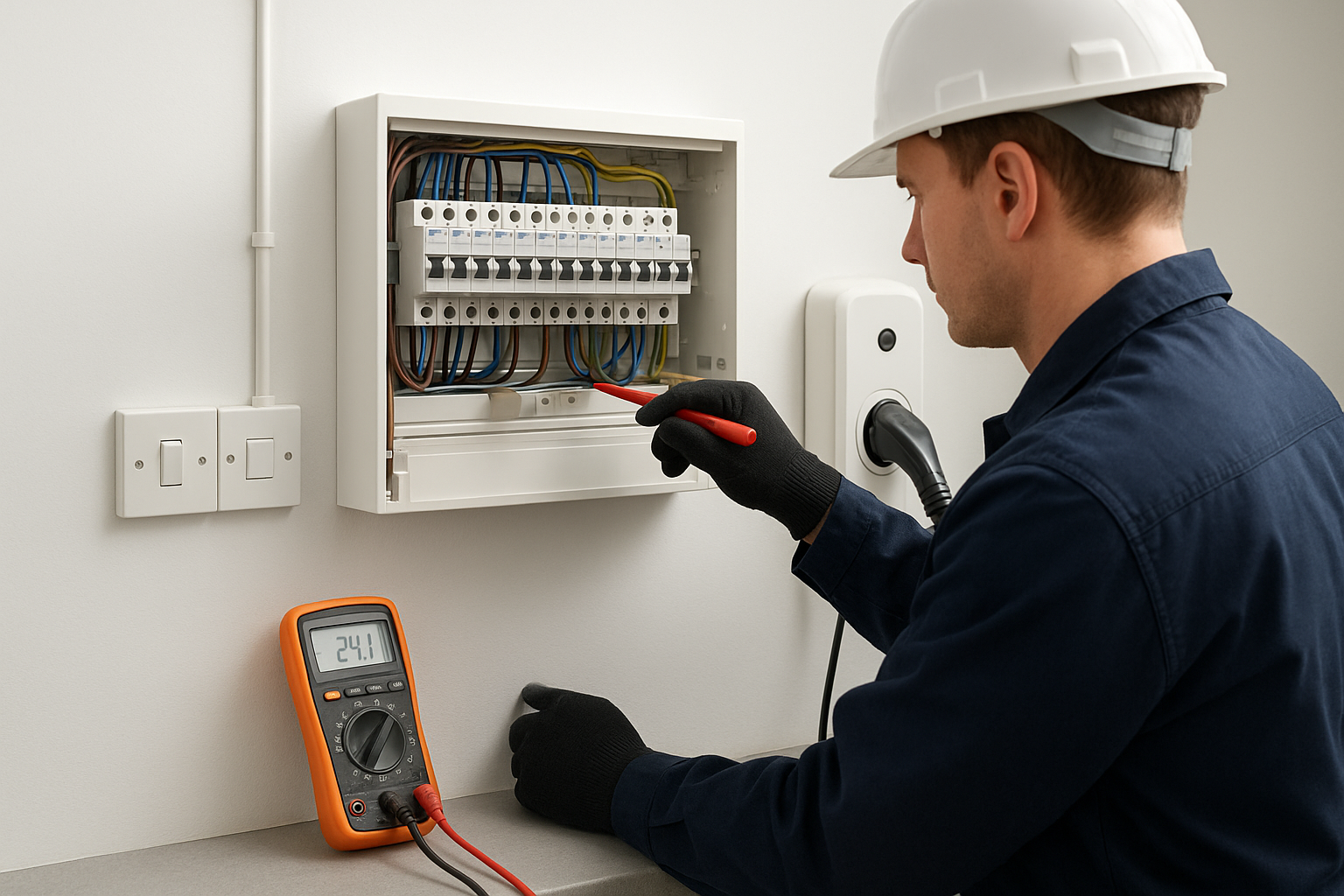
If your fuse box keeps tripping, a breaker will not reset, or you have noticed buzzing, heat or a partial power loss, the safest next step is to arrange a proper inspection rather than keep resetting it. Wirelynx Wiring Specialists provide fuse box repair Pimlico services for homeowners, landlords, tenants and property managers across Pimlico and the surrounding areas, including Victoria, Belgravia, Westminster, Chelsea and Vauxhall.
Fuse box problems are often a sign of something deeper than a single failed switch. The issue may sit with the consumer unit itself, a damaged circuit, a faulty appliance, moisture ingress, ageing wiring, or a breaker that is no longer operating correctly. In older Pimlico homes, especially Victorian terraces, converted flats and properties that have had partial rewires, these faults can appear intermittently and be difficult to trace without methodical testing.
Our work focuses on finding the cause first, then advising whether the right solution is a repair, a component replacement, a consumer unit upgrade or a fuller rewire. That approach helps avoid repeat callouts and gives you a clearer picture of what is safe to use now, what should stay switched off, and what needs further attention.
Call 020 3633 8397 or email info@pimlico-electricians.co.uk to request a visit. We operate 24 hours for urgent electrical issues.
Fuse Box Fault Finding in Pimlico
Fuse box fault finding is the starting point when the problem is not obvious. A fuse box, also called a consumer unit or fuse board, is the control point for the circuits in your property. When it behaves abnormally, the fault may be inside the board, on a connected circuit, or caused by an appliance pulling the installation down.
Common symptoms we see in Pimlico include:
- The fuse box keeps tripping without a clear pattern
- Half the house has no power after a trip
- A breaker will not reset or drops immediately again
- Buzzing, warmth or a burning smell around the fuse board
- Lights flickering or going out on one circuit only
- Repeated loss of power after using a kettle, heater, oven or washing machine
In a fault finding visit, we look at the condition of the consumer unit, the circuit layout, signs of overheating, and the way the fault presents itself. We also check whether the issue is local to one point or spread across several circuits. In older buildings near Pimlico Station, Tate Britain, Millbank and the Pimlico Road area, we often find a mix of legacy wiring and later alterations, which can make the fault harder to isolate.
Likely causes include a damaged cable, a loose connection, water ingress, a failing breaker, overloaded sockets, or deterioration in older wiring. In some cases, the consumer unit is doing its job correctly by tripping to protect the installation. In other cases, the board itself is worn out and no longer reliable.
Where it is safe to do so, we isolate the affected circuit, identify the problem area and explain whether a repair is possible or whether the installation would be better served by an upgrade. If the fault suggests a broader safety issue, we will advise you to keep the affected circuit off until the next stage is completed.
Tripping Breaker Investigation in Pimlico
Breaker tripping is one of the most common reasons people contact an electrician. It can happen once after an obvious overload, or it can happen repeatedly with no clear trigger. A proper tripping breaker investigation aims to separate a one-off event from a genuine electrical fault.
If a breaker trips when several high-load appliances are used together, the cause may be simple circuit overload. If it trips when a single item is switched on, the likely cause may be a faulty appliance, a damaged socket, a failing connection or a defect in the circuit itself. If the breaker trips immediately after being reset, there may be a short circuit or an insulation fault that needs urgent attention.
We investigate tripping breakers in properties across Pimlico and nearby locations such as Victoria, Belgravia, Westminster, Chelsea and Vauxhall. This includes flats, maisonettes, older conversions, ground-floor commercial units and mixed-use buildings where electrical loads have changed over time.
During the visit, we assess the circuit history, the load pattern and the condition of the wiring and protective devices. We may recommend separating high-demand appliances, replacing a faulty breaker, or carrying out additional testing if the cause is not immediately visible. If the breaker is protecting an ageing circuit in a property with older rewires, the best option may be to upgrade the affected part of the installation rather than keep replacing components one by one.
For landlords and property managers, repeated tripping can quickly become a tenant issue and a maintenance issue. It can affect refrigeration, heating controls, lighting and safety-critical equipment. A prompt investigation helps reduce disruption and gives a clearer record of what has been checked and what still needs action.
RCD Nuisance Tripping in Pimlico
An RCD is designed to protect people by disconnecting power when it detects an earth leakage problem. If it trips repeatedly, that is not something to ignore. Sometimes the trip is caused by a real fault. Sometimes it is linked to an appliance, damp, cable damage or cumulative leakage across several circuits. Either way, repeated nuisance tripping deserves proper testing rather than guesswork.
In Pimlico homes, nuisance RCD tripping often shows up in kitchens, bathrooms, utility areas and external circuits. It may happen after rain, when a washing machine or dishwasher starts, when outdoor lighting is used, or when several appliances are on at once. In older properties close to Westminster and Belgravia, the combination of ageing wiring and modern appliances can expose weaknesses that were not obvious before.
Typical causes include:
- A faulty appliance with earth leakage
- Moisture in an outdoor fitting or socket
- Damaged cable insulation
- Neutral and earth faults
- Accumulated leakage from multiple items on the same RCD
- A consumer unit issue or incorrect circuit arrangement
Our approach is to identify whether the RCD is reacting to a genuine safety fault or whether the installation layout needs improvement. That can lead to a repair, a circuit correction, a replacement device, or in some cases a recommendation to upgrade the consumer unit so the installation is better organised and easier to maintain.
Customers should not keep resetting an RCD if it trips repeatedly. Switch off the affected circuit, keep clear of any damaged or wet equipment, and arrange an electrician to inspect it. If the problem affects essential power or a whole section of the property, let us know when you call so we can prioritise the visit appropriately.
Faulty Breaker Replacement in Pimlico
Sometimes the investigation shows that the breaker itself is faulty. Protective devices do age, and a breaker that has operated repeatedly, overheated, or suffered internal wear may no longer perform reliably. In that situation, replacement may be the correct repair, but only after the circuit has been checked and the underlying cause understood.
We replace faulty breakers when testing and inspection indicate that the device is no longer functioning as intended. That may be because of mechanical wear, heat damage, poor connection integrity, or a history of repeated tripping. We also check that the replacement device is suitable for the circuit and the installation as a whole.
This is particularly relevant in older Pimlico properties, including Victorian terraces and converted flats where the consumer unit may have been installed years after the original wiring. In those homes, a single faulty breaker can sometimes reveal larger issues such as overloaded circuits, mixed cable types or a board that is no longer ideal for the property’s current electrical demand.
Replacement is not always the same as a full upgrade. If the rest of the board is in sound condition and the circuit tests are satisfactory, a targeted repair may be enough. If several devices are worn, the board is outdated, or the layout makes maintenance difficult, then a consumer unit upgrade may be the more practical long-term option. We will explain the difference clearly so you can make an informed decision.
For commercial premises, shops and offices near Victoria Station or along routes into Westminster, breaker replacement may also be part of restoring routine power quickly while keeping the installation safe for staff and customers.
Fuse Board Safety Checks in Pimlico
Fuse board safety checks are useful when a property has had repeated issues, has an older consumer unit, or is being prepared for sale, tenancy changeover or refurbishment. They are also sensible after a fault has been repaired, because a safe repair should be followed by confirmation that the rest of the board and connected circuits are still in good condition.
During a fuse board safety check, we look for signs of:
- Overheating or discolouration
- Loose or poor connections
- Age-related wear on protective devices
- Improper circuit identification
- Damage from moisture or past faults
- Evidence that the board may need upgrading
This is especially important in properties with older rewires, partial upgrades or mixed eras of electrical work. In flats near Pimlico Station or along Millbank, we often see installations where the consumer unit has been changed but the rest of the system still reflects the age and condition of the original building work. A safety check helps identify whether the board is still suitable for daily use or whether a more substantial improvement should be planned.
For landlords and property managers, a clear safety check can help inform maintenance planning and reduce avoidable callouts. For homeowners, it provides reassurance that the board is not showing early signs of overheating or deterioration.
Depending on what we find, the next step may be a repair, a breaker replacement, a consumer unit upgrade or a recommendation to review the wider wiring. Some electrical work is notifiable under Part P of the Building Regulations and should be certified where applicable. If you are unsure what applies to your property, we can explain the practical next step before any work is agreed.
Repair, Upgrade or Rewire: How to Decide
Many fuse box problems can be solved without replacing the whole installation, but not every fault should be treated as a simple repair. The right option depends on the symptoms, the age of the wiring, the condition of the board and how often the problem returns.
Repair may be suitable when:
- The fault is isolated to one breaker, socket, light or appliance
- The consumer unit is otherwise in good condition
- Testing points to a specific damaged component or connection
- The installation is broadly modern and well organised
Upgrade may be the better option when:
- The board is outdated or poorly arranged
- Several breakers are unreliable
- RCD nuisance tripping is linked to the layout of the installation
- The property has changed use and now carries a heavier load
Rewire or wider remedial work may be needed when:
- The property has very old wiring or a legacy fuse wire board
- There are repeated faults across multiple circuits
- There are signs of deterioration, heat damage or unsafe alterations
- The installation no longer supports safe day-to-day use
In Pimlico, we often see this decision point in Victorian terraces, converted flats and older apartments that have been modernised in stages. A kitchen may have been upgraded, a consumer unit may have been replaced, and yet the rest of the circuits still need attention. That is why we focus on evidence from inspection and testing rather than assuming the same solution fits every property.
What Happens After the Repair
Once the immediate fault has been dealt with, aftercare matters. A repaired fuse box or breaker should not simply be left with no explanation. We aim to leave customers with a clear understanding of what was found, what was fixed and what should be monitored next.
Aftercare may include advice on:
- Which circuits should remain switched off until further work is completed
- Which appliances may have contributed to the fault
- Whether any sockets, lights or fittings need further attention
- Signs of repeat tripping, heat or noise to watch for
- Whether the property would benefit from a consumer unit upgrade or rewiring plan
For tenants, that can mean practical guidance on safe day-to-day use while the landlord or managing agent arranges the next step. For homeowners, it can help prevent the same issue returning. For commercial customers, it supports continuity by making the fault history clearer for future maintenance.
If you are in Pimlico, Victoria, Belgravia, Westminster, Chelsea or Vauxhall and need help with a fuse box fault, we can inspect the issue, explain the likely cause and discuss the most sensible repair path.
Wirelynx Wiring Specialists are based at 20 Denbigh Pl, Pimlico, London SW1V 2HA, United Kingdom and are available 24 hours for electrical faults. Call 020 3633 8397 or email info@pimlico-electricians.co.uk to arrange fuse box repair, fault finding, breaker replacement or a fuse board safety check.
Recent local work: We traced an intermittent lighting fault in Westminster, restored safe use after a loss-of-power callout in Chelsea, and reviewed kitchen electrical points in Vauxhall after nuisance tripping. Those jobs reflect the type of fault finding and practical advice we bring to fuse box problems across central and south-west London.